Techno-economic analysis
Hydrogen subsidies that backfire
Subsidizing grid-based electrolytic hydrogen raises emissions above coal-based hydrogen in a coal-heavy power system.
Published finding
The same subsidy target can reverse the emissions outcome
Cheaper, but lifecycle emissions can exceed coal-based hydrogen in coal-heavy provinces.
Cuts lifecycle emissions by 55–88% from 2025–2040 with only a 6–27% increase in levelized cost.
Techno-economic and life cycle analysis, 2023 to 2024. Published in Environmental Science & Technology, 2024. First joint runner-up, Best Paper Award.
The problem
Hydrogen subsidies are usually written for hydrogen, not for the electricity behind it. A subsidy that pays per kilogram of electrolytic hydrogen pays the same whether the electrolyzer runs on a wind farm or on a grid that is still mostly coal, and the assumption is that either way the result is cleaner than the fossil alternative it displaces.
What I did
I built an integrated provincial analysis of levelized cost and life cycle greenhouse gas emissions for every hydrogen production route in China, including coal-based, gas-based, and electrolytic production on renewable and grid electricity, and evaluated what different subsidy designs do to both quantities at once.
What I found
Subsidizing grid-based electrolytic hydrogen increases CO2-equivalent emissions in a coal-dominated power system, and does so even relative to coal-based hydrogen, which is the outcome the policy was written to avoid. Subsidies on renewable-based hydrogen, by contrast, buy cost-effective emission reductions. Because grid electricity in China remains coal-heavy and will likely stay so past 2030, this is not a transitional artifact that resolves itself on its own, and it gets worse if new coal plants continue to be approved. Levelized costs of renewable-based hydrogen vary widely between provinces, and pipeline transport from low-cost to high-cost regions lowers the national average, though it raises leakage and the indirect warming that follows.
The design implication is specific: tie the subsidy to the electricity source, not to the hydrogen.
Research figure
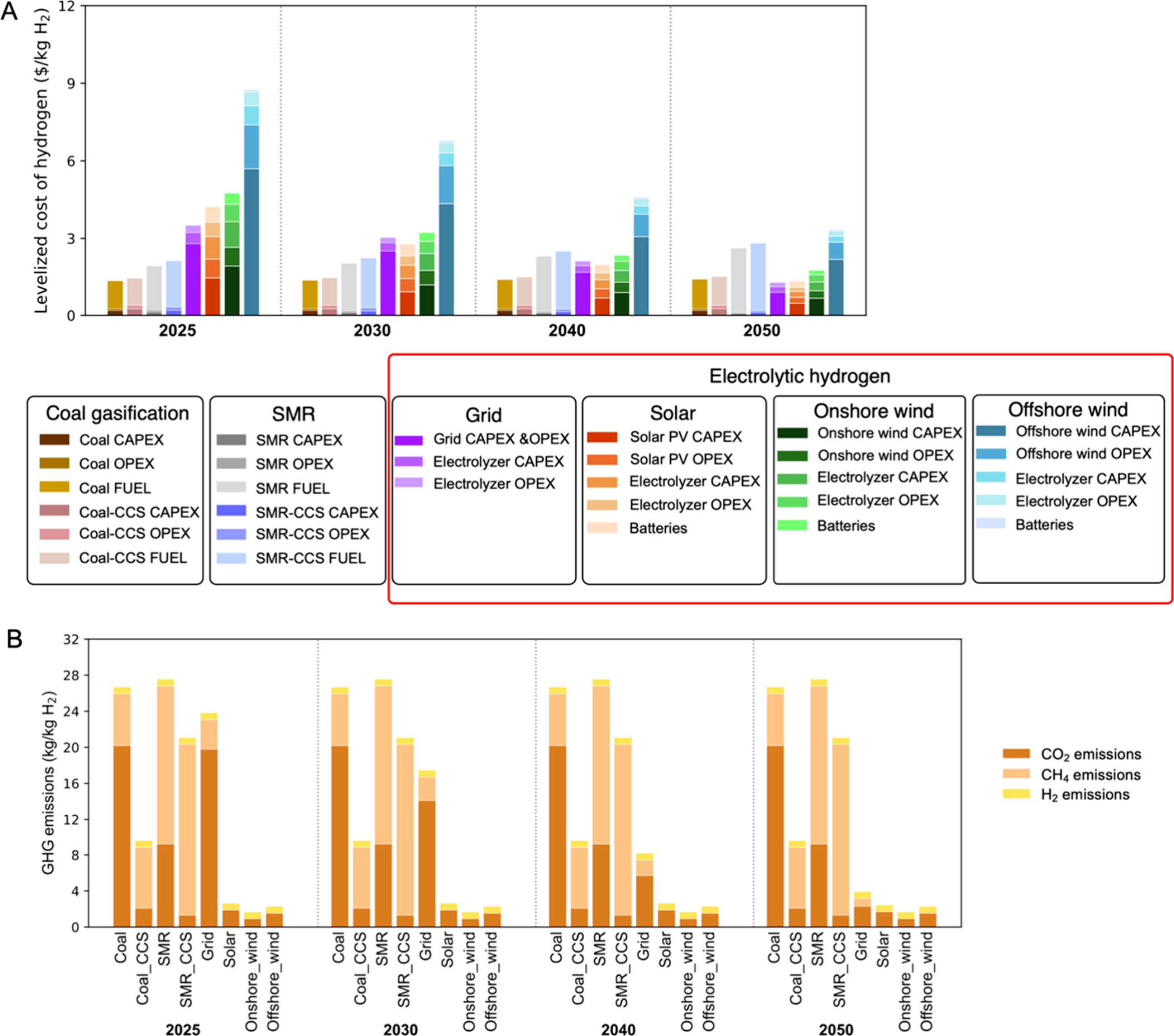
The published analysis compares the levelized cost and greenhouse gas emissions of fossil and electrolytic hydrogen pathways through 2050.
Limits
The analysis is provincial and annual in its emissions accounting, and it prices hydrogen production rather than the downstream industrial conversion that would use it.