Power system modeling
Offshore wind beyond carbon
Provincial priorities, not national cost, decide what gets built. Offshore wind could supply 3 to 18% of China's electricity by 2050.
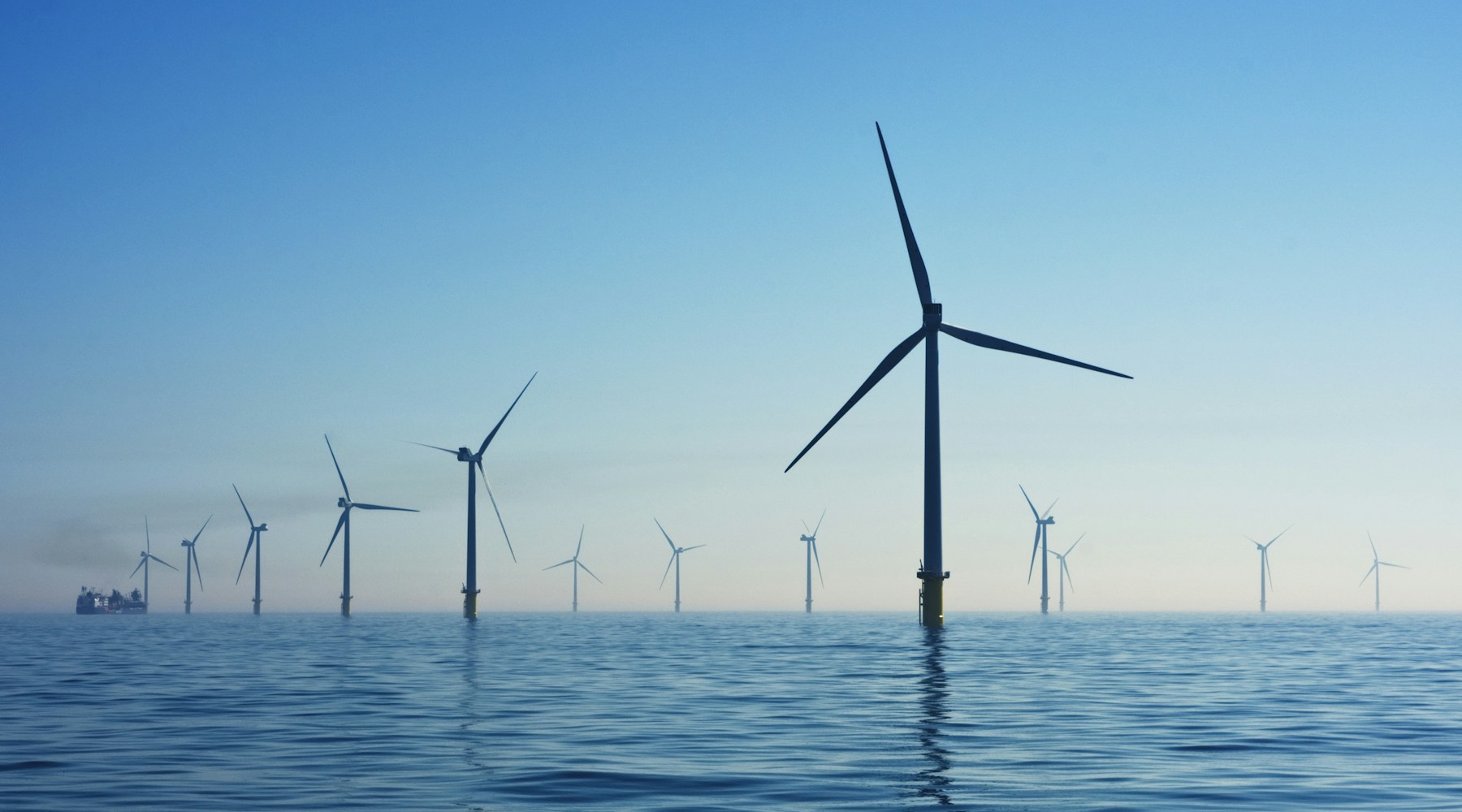
Photo by Nicholas Doherty on Unsplash. Data from the published research.
Published finding
A higher target turns coastal regions from importers into exporters
Power system modeling, 2023 to 2024. Published in Communications Earth & Environment, 2026.
The problem
Offshore wind is one of the few resources that can decarbonize coastal power systems at scale, and it is consistently deployed below its potential. National cost minimization is not what holds it back. Provinces and states decide whether a project proceeds, and they weigh things a national cost model does not price: energy self-sufficiency, local investment, employment, and grid reliability within their own borders.
What I did
I modeled offshore wind deployment in China, the global leader in installed capacity, and evaluated it against the benefits that local governments actually respond to rather than against system cost alone. The analysis quantifies how deployment changes provincial energy self-sufficiency, resource diversity, storage requirements, investment, and jobs, and it propagates uncertainty in policy, technology cost, and electricity demand rather than reporting a single trajectory.
What I found
Offshore wind shifts coastal provinces from net electricity importers to exporters, which converts a resource that provinces treat as expensive into one that serves an interest they already hold. It also reduces the storage a high-renewable grid needs, and drives substantial local investment and job creation. Across the uncertainty ranges, offshore wind could supply 3 to 18% of China’s electricity by 2050. Aligning deployment with local priorities supports more ambitious targets with limited increases in system cost, which is the finding that matters for anyone negotiating a target with a subnational government.
Limits
The results are specific to China’s provincial structure and its planning process. The mechanism generalizes, since the same misalignment between national optimization and local approval governs offshore wind in the U.S. and Europe, but the magnitudes do not transfer directly.
Read it
Blog post: beyond carbon, what we learned from modelling this expansion
Paper in Communications Earth & Environment · LBNL report on offshore wind and energy security in China’s coastal regions